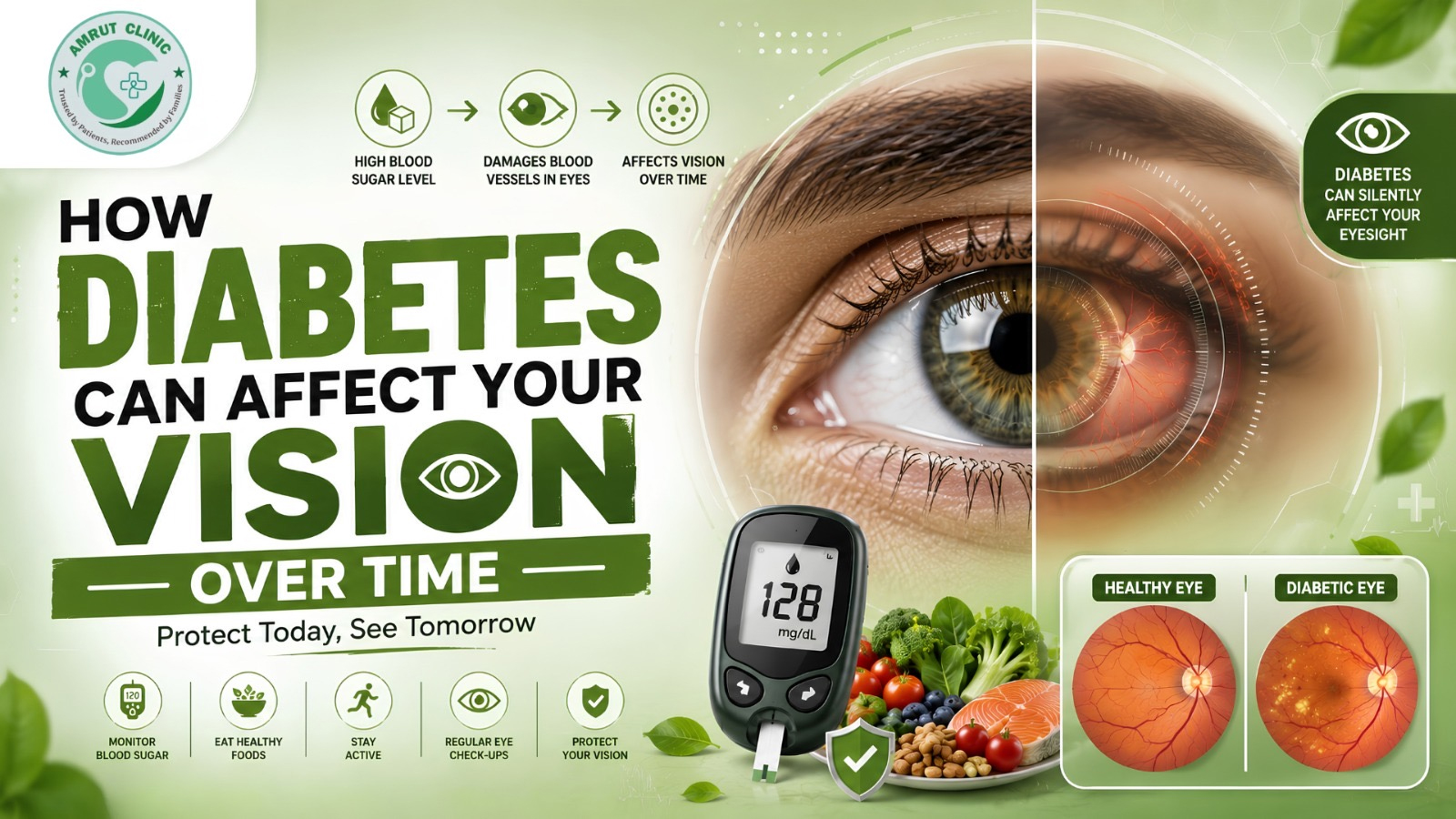
How Diabetes Can Affect Your Vision Over Time
Most people living with diabetes understand the importance of monitoring their blood sugar levels, but what many don't realize is that diabetes can affect much more than blood sugar. It can also have a significant impact on vision.
Our eyes help us experience life's most meaningful moments, from reading a loved one's message to watching our children grow. Yet diabetes can quietly affect eye health over time, often without causing obvious symptoms in the beginning.
That's why understanding this connection is so important.
Your Eyes & Diabetes Are More Connected Than You Think
The eyes contain tiny blood vessels that help nourish the retina, the part of the eye responsible for sending visual information to the brain. When blood sugar levels remain high for long periods, these delicate blood vessels can become damaged.
This process usually happens gradually, which is why many people don't notice any problems until the condition has already progressed. In many cases, vision changes develop silently, making regular eye check-ups an essential part of diabetes care.
Why Vision Changes May Be Easy to Ignore
Have you ever experienced occasional blurry vision and assumed it was due to tiredness or spending too much time on your phone or computer? While that can sometimes be true, fluctuating blood sugar levels can also affect how clearly you see.
Some people notice temporary blurriness when their blood sugar rises or falls significantly. Because these changes may come and go, they are often dismissed as minor issues rather than potential warning signs.
When Diabetes Starts Affecting the Eyes
Over time, uncontrolled diabetes can increase the risk of several eye-related conditions.
Diabetic Retinopathy
One of the most common complications is diabetic retinopathy. This occurs when high blood sugar damages the tiny blood vessels in the retina.
The challenging part is that the condition often develops without noticeable symptoms in its early stages. As it progresses, vision may become blurry, dark spots may appear, or seeing clearly may become more difficult.
Cataracts
People with diabetes are more likely to develop cataracts earlier than those without diabetes. Cataracts cause the lens of the eye to become cloudy, making vision appear blurry or faded.
Glaucoma
Diabetes can also increase the risk of glaucoma, a condition that damages the optic nerve and may gradually affect vision if left untreated.
Small Symptoms Can Be Important Signals
Many people wait until their vision becomes severely affected before seeking help. However, even subtle changes deserve attention.
Some signs that should not be ignored include:
• Frequent blurry vision
• Difficulty seeing at night
• Seeing floaters or dark spots
• Sudden changes in eyesight
• Trouble focusing
• Areas of missing or shadowed vision
These symptoms don't always mean a serious problem is present, but they are worth discussing with a healthcare professional.
Protecting Your Eyes Starts With Everyday Habits
The good news is that many diabetes-related eye complications can be prevented or delayed.
Managing blood sugar levels, eating balanced meals, staying physically active, taking medications as prescribed, and attending regular health check-ups all contribute to better eye health. Just as importantly, regular eye examinations can help detect changes long before they begin affecting vision.
Looking Beyond Blood Sugar Readings
When managing diabetes, it's easy to focus only on glucose numbers. But diabetes care is really about protecting your overall health, including your heart, kidneys, nerves, and eyes.
At Amrut Clinic, we encourage patients to think beyond daily sugar readings and prioritize preventive care. A simple eye examination today could help identify problems early and protect your vision in the future.
Because some of life's most precious moments are meant to be seen clearly, and taking care of your diabetes is one of the best ways to help protect that gift.